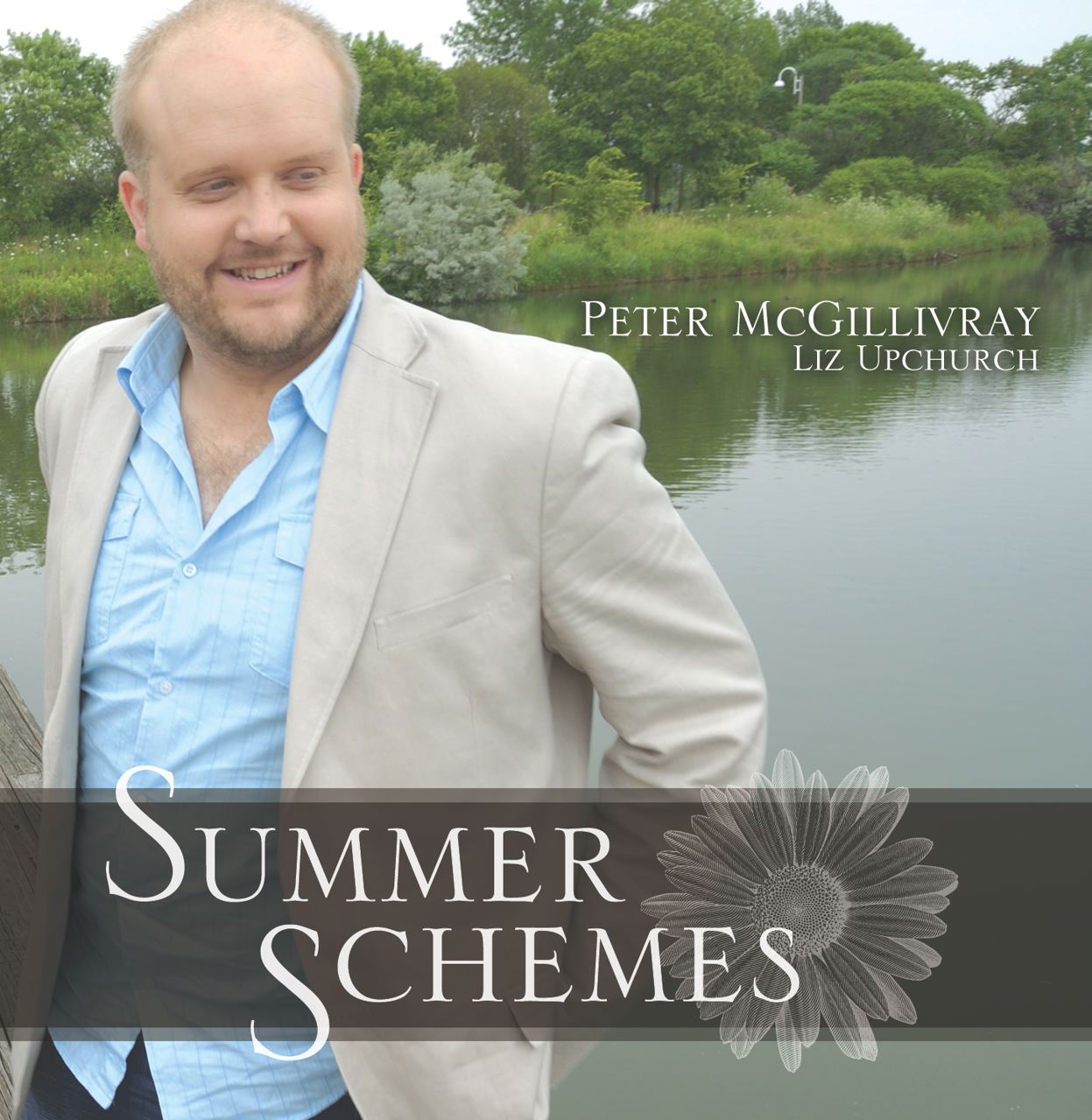
An album of songs inspired by Summer featuring works by Quilter, Brahms, Vaughan Williams, Gurney, Warlock, Ives, Debussy, Chausson, Finzi & Britten
Summer—often overshadowed by the rich, romantic outpouring dedicated to the glories of spring, yet it is hardly ignored. “Summer,” as Amy Lowell wrote, “is the very crown of nature’s changing year, when all her surging life is at its full.” It is a time of great vitality for both people and nature: birds and insects fill the air and trees with life and song, flowers bloom and begin to bear fruit. Summer is also a time of labour and of relaxation, of blossoming love and of childhood adventure. Above all, summer is a time to fully experience the joys, aches, and wonders of time spent out of doors.
This collection of British, American, German, and French art songs attempts to capture these aspects of our interaction with the natural world over the course of a summer’s day. Selections from the Golden Age of English song paint a spectrum of images and emotion: Quilter’s rapturous songs of new love and summer mornings in Daybreak; the sensuous satisfaction of Vaughan Williams’s Silent Noon and Youth and Love and of Warlock’s Late Summer; and the haunting dreaminess and heartbreak of Britten’s The Salley Gardens, and Gurney’s Sleep. In further contrast, Finzi’s setting of Hardy’s Summer Schemes, tempers our delight in nature with a world-wise sensibility, while Butterworth’s Housman settings remind us that the summertime is not immune from sorrow nor is the season bereft of loss.
Soaring to lands beyond Britain, American Charles Ives, conveys the joys of New England summers—from the boyhood innocence of The Greatest Man and The Circus Band to the fluvial Housatonic at Stockbridge. Brahms’s masterful lieder are represented, from the furiously passionate Meine Liebe ist grün to the ethereal Feldeinsamkeit, which inscribes a perfect moment of suspended time. Debussy’s ebullient settings of Verlaine’s evocative landscape poems, rich in seasonal imagery and dating from the poet’s visits to England, are dedicated to Chausson. In turn, the fluttering texture of Chausson’s Les papillons contrasts with his sumptuous and erotic setting of Le colibri.
William Carlos Williams wrote that “in summer, the song sings itself.” One hopes this collection allows the listener to glimpse, in some small manner, how wonderfully and in how many ways this is true.